
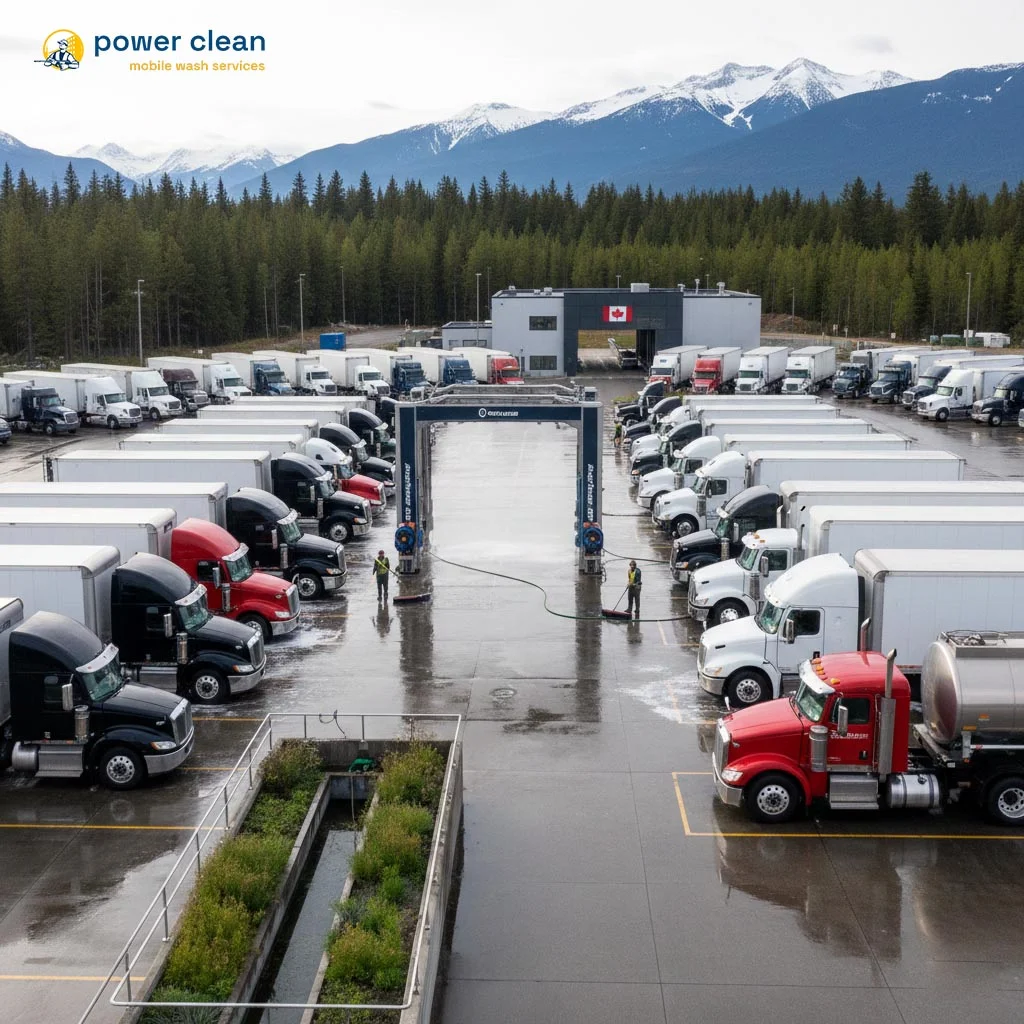
In the vast and demanding landscape of the Canadian transportation industry, maintaining a clean fleet is far more than a matter of vanity. For logistics companies, carriers, and owner-operators, fleet washing is a critical maintenance protocol that impacts safety, longevity, branding, and legal compliance. From the salt-heavy winters of Ontario to the dusty summer highways of the Prairies, Canadian trucks endure some of the most punishing environmental conditions on the planet.
Adhering to high fleet washing standards is essential for protecting a company’s bottom line. However, the process is governed by strict environmental regulations and technical requirements. This is where professional Power Clean Mobile Wash services provide a vital solution, offering on-site, industrial-grade cleaning that meets national standards without the logistical nightmare of moving a fleet to a fixed wash bay.
This comprehensive guide explores the essential standards for fleet washing in Canada and why professional intervention is the only way to ensure total compliance and asset protection.
1. Environmental Compliance: The Canadian Regulatory Framework
Canada is home to some of the world’s strictest environmental protections. Transportation companies must navigate a complex web of federal, provincial, and municipal bylaws when it comes to washing their vehicles.
The Fisheries Act and Deleterious Substances
At the federal level, the Fisheries Act prohibits the discharge of any “deleterious substance” into water frequented by fish. In the context of fleet washing, this includes oil, grease, heavy metals, and even certain detergents. If a company washes its trucks on a lot where the runoff enters a storm drain that leads to a local creek or Lake Ontario, they could face massive federal fines.
Municipal Sewer Use Bylaws in the GTA
Cities like Toronto, Mississauga, and Brampton have specific Sewer Use Bylaws. These bylaws strictly differentiate between storm sewers (which lead to nature) and sanitary sewers (which lead to treatment plants).
-
Standard: It is illegal to allow wash water containing oil or chemicals to enter storm drains.
-
Solution: Professional mobile wash teams ensure that all wastewater is managed according to local environmental standards, often utilizing water recovery systems.
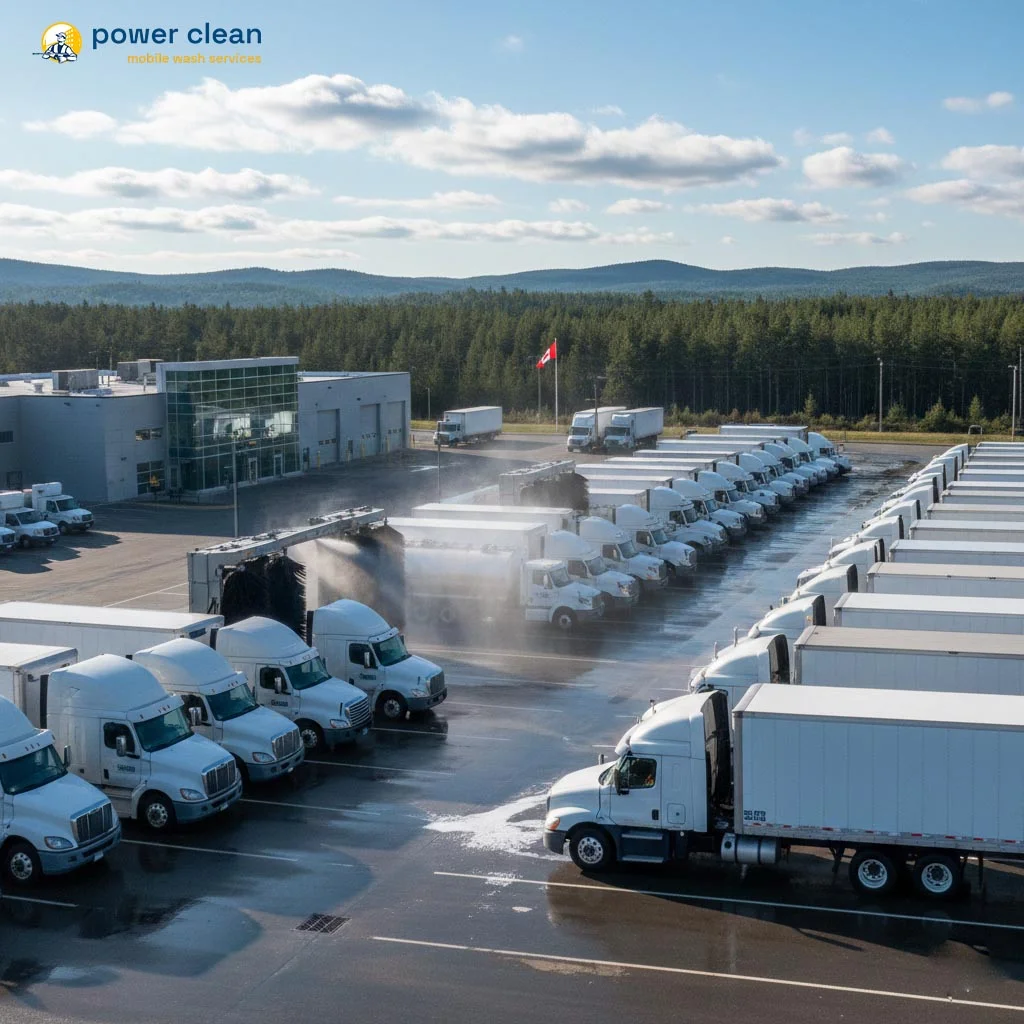
2. Technical Standards: Hot Water vs. Cold Water
In the Canadian climate, cold water pressure washing is simply ineffective for professional fleets. To meet the required standards of cleanliness and sanitization, industrial-grade equipment is mandatory.
The Power of Heat (180°F – 200°F)
Road salt, diesel soot, and hydraulic fluids create a “traffic film” that bonds to the vehicle’s paint and chassis.
-
Standard: High-pressure hot water (at least 180°F) is required to emulsify grease and break down chemical bonds.
-
Benefit: Using heat reduces the need for aggressive scrubbing, which protects the integrity of the vehicle’s graphics and paint.
PSI and GPM Balance
A common mistake is using too much pressure (PSI) and not enough water volume (GPM).
-
Standard: Professional truck fleet pressure washing requires a high flow rate to flush out contaminants from hard-to-reach areas like the frame rails and air brake systems.
3. Corrosion Control: The Battle Against Canadian Road Salt
The single greatest threat to a Canadian transportation fleet is corrosion. Ontario uses an immense amount of road salt and liquid brines (Calcium Chloride) during the winter. These chemicals are highly corrosive and “sticky.”
Undercarriage Washing Standards
The most critical part of fleet washing isn’t the shiny sides of the trailer—it’s the undercarriage.
-
The Danger: Salt trapped in the chassis causes premature rusting of frame rails, fuel tanks, and electrical harnesses.
-
The Standard: A thorough undercarriage flush must be performed weekly during the winter months to neutralize salt before it can cause structural damage.
4. Safety and Inspection Standards (CVOR & NSC)
A dirty truck is a safety hazard. In Canada, the National Safety Code (NSC) and the Commercial Vehicle Operators’ Registration (CVOR) in Ontario mandate strict inspection routines.
| Component | Impact of Dirt/Grime | Standard Requirement |
| Brake Systems | Salt causes corrosion of air lines and chambers. | Cleaned to ensure clear inspection of leaks. |
| Chassis/Frame | Grime hides stress cracks and structural fatigue. | Must be clean enough to spot metal failure. |
| Lights & Reflectors | Dirt reduces visibility and increases accident risk. | 100% reflectivity and luminosity required. |
| Engine Bay | Oil buildup creates a significant fire hazard. | Degreased to monitor for fresh leaks. |
5. Maintenance Frequency: A Seasonal Guide
Transportation companies must adjust their washing standards based on the Canadian season.
Winter (December – March): High Frequency
-
Frequency: Weekly or after every major storm.
-
Focus: Total salt removal and underbody cleaning.
Spring (April – May): The Deep Clean
-
Frequency: Bi-weekly.
-
Focus: Removing the winter’s accumulation of brine and mud to prevent “baking” in the sun.
Summer (June – August): Aesthetic & Efficiency
-
Frequency: Bi-weekly or monthly.
-
Focus: Bug removal and radiator cleaning to prevent engine overheating during long hauls.
6. Bio-Security and Interior Standards for Reefers
For fleets involved in food and beverage logistics, the standards extend to the interior of the trailer.
-
Standard: Refrigerated trailers (reefers) must be washed out and sanitized to prevent cross-contamination and bacterial growth.
-
Protocol: Using high-heat steam and food-grade sanitizers to meet Hazard Analysis and Critical Control Points (HACCP) requirements.
7. The Logistics of On-Site Washing
Moving a fleet of 50 trucks to a stationary wash bay is an operational nightmare. It wastes fuel, driver hours, and adds wear and tear to the vehicles.
-
The Modern Standard: Mobile on-site washing.
-
The Advantage: Professional teams like Power Clean Mobile Wash arrive during your fleet’s “downtime” (nights or weekends), ensuring that every truck is ready for the road without interrupting operations.
8. Financial Impact of Maintaining High Standards
While fleet washing is an expense, it is also a cost-saving measure.
-
Resale Value: A well-maintained truck with a clean, rust-free chassis can fetch thousands of dollars more at trade-in.
-
MTO Readiness: Clean trucks are less likely to be flagged for “random” roadside inspections by the Ministry of Transportation.
-
Fuel Efficiency: Removing hundreds of pounds of caked-on mud and ice can actually improve fuel economy over long distances.
Frequently Asked Questions (FAQ)
1. Does your mobile service bring its own water?
Yes. One of our primary advantages is that our mobile units are equipped with large-scale water tanks. We do not need to hook up to your facility’s water supply, which is ideal for remote lots or yards with limited infrastructure.
2. Can you wash trucks during the freezing Ontario winters?
Absolutely. Using industrial heaters, we can wash in cold temperatures. However, we take specific precautions to ensure that locks and air lines do not freeze by using targeted drying and proper drainage techniques.
3. Are the detergents used safe for my truck’s decals and wraps?
Yes. We use high-quality, pH-balanced, and biodegradable soaps. Combined with our temperature-controlled water, we can remove grime without damaging your company’s branding or the paint finish.
4. Why is professional fleet washing better than a driver doing it?
Drivers often lack the equipment (hot water and high GPM) to reach the critical undercarriage areas. Furthermore, professional services handle the environmental liability of wastewater, protecting the company from fines.
Essential Fleet Washing Checklist for Managers
If you are auditing your current fleet maintenance program, ensure it covers these 6 points:
-
[ ] Hot Water Capability: Is the water reaching at least 180°F?
-
[ ] Undercarriage Focus: Are the frame and axles being flushed?
-
[ ] Environmental Compliance: Is wash water being diverted from storm drains?
-
[ ] Sanitization: Are reefer units being steam-cleaned internally?
-
[ ] Scheduling: Is washing happening during downtime to maximize “wheels turning” time?
-
[ ] Inspection Prep: Is the engine and chassis clean enough for a mechanic to spot a leak?
Conclusion: Partner with Toronto’s Fleet Washing Experts
In Canada, fleet washing is a complex intersection of mechanical maintenance, safety, and environmental law. Transportation companies that settle for mediocre cleaning are risking their equipment and their reputation.
At Power Clean Mobile Wash, we understand the unique challenges of the Canadian transportation sector. Our mobile, self-contained units bring industrial cleaning power directly to your yard, ensuring your fleet meets the highest standards of excellence in the GTA and beyond.
Schedule Your Fleet Assessment Today
Keep your trucks on the road, your drivers safe, and your brand looking its best. Let us design a customized wash program that fits your operational needs.
Contact Us Today:
Tel : (647) 949-7514
Visit our website to learn more about our professional truck fleet pressure washing services and how we help Canadian carriers shine.
Focus Keyword: Fleet washing standards for transportation companies
Meta Title: Fleet Washing Standards in Canada | Transportation & Logistics Guide
Meta Description: Essential fleet washing standards for Canadian transportation companies. Learn about environmental compliance, salt removal, and the benefits of on-site mobile washing.